Start lower-complexity
Early introductions should use popular frontcountry routes, daylight, clear starts, and clear turnaround intentions.
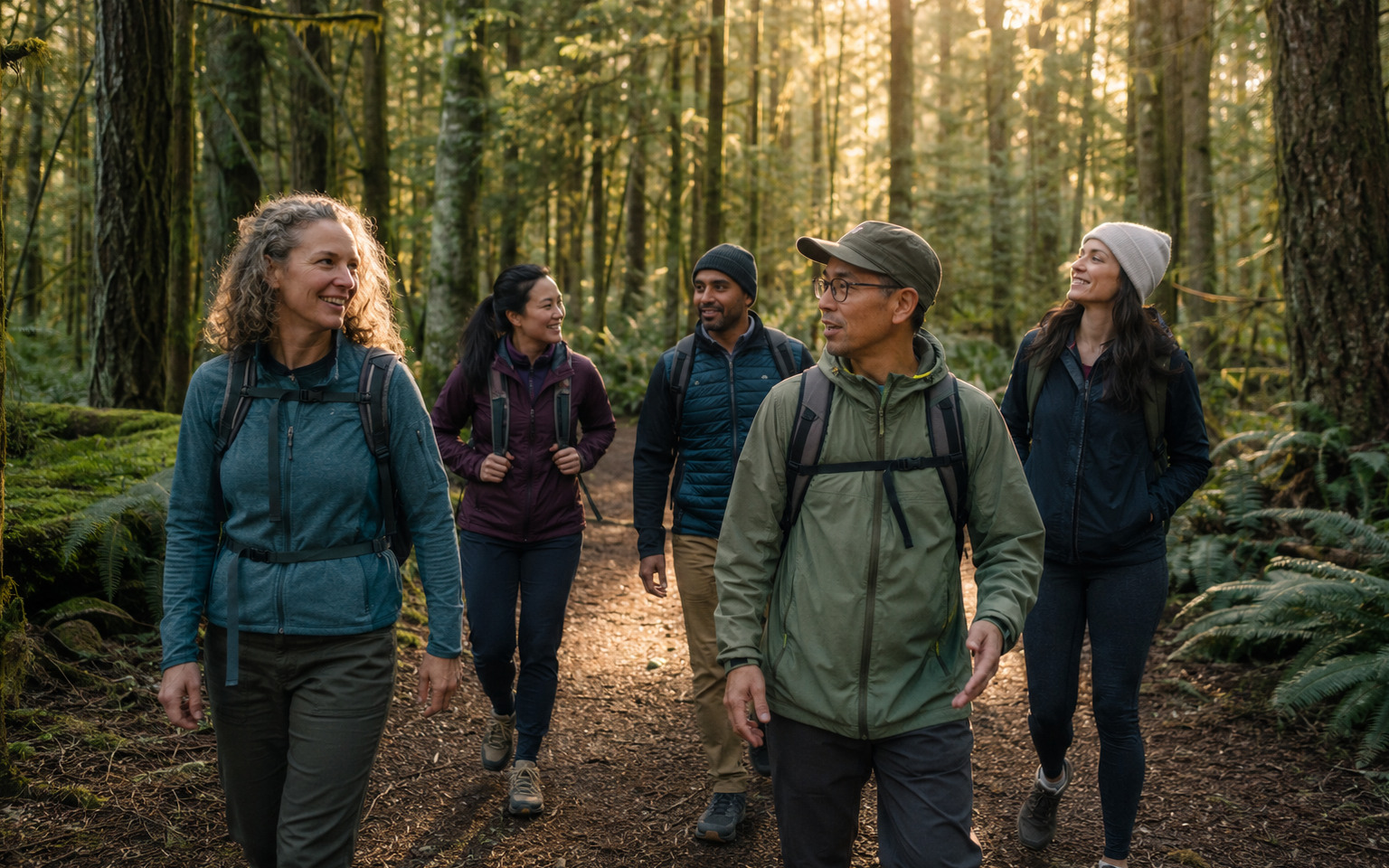
Trail Meet safety approach
Trail Meet is not a guide, emergency service, route authority, or substitute for current official information. No matching system can guarantee that a person or outing is safe.
Early introductions should use popular frontcountry routes, daylight, clear starts, and clear turnaround intentions.
State the route, distance, elevation, expected pace, conditions, transport, meeting point, and everyone attending.
Remote, difficult, poorly covered, or unfamiliar terrain should not be treated like a casual one-to-one introduction.
Every hiker remains responsible for checking current conditions, carrying suitable essentials, and choosing a plan within their ability.
Tell someone outside the group where you are going, who you are meeting, and when you expect to return.
Decline, leave, block, or report without needing to justify a boundary. Compatibility signals are never a safety guarantee.
Founding-beta boundary
Trail Meet now accepts founding interest, but reporting, blocking, hosting, verification, moderation, notifications, emergency contacts, and check-ins are not live services. Pair matching, direct messaging, and real outings remain disabled until those systems and operating procedures exist.